Published: 21/07/24
The legacy of Dr. Paul Niehans in cellular therapy and longevity
Marked by a profound sense of humanitarian responsibility and charity, Dr Paul Niehans saved the lives of thousands of people through his groundbreaking work in regenerative medicine and cellular therapy. His legacy continues to inspire and shape the modern wellness practices at Clinique La Prairie, where his spirit of compassion and dedication to medical advancement live on.
Grandson from his mother’s side of Emperor Frederick III of Germany and son of a professor of medicine at the University of Bern, the inventor of cellulotherapy was born on November 21, 1882. Dr. Paul Niehans, a 1908 medical graduate from the University of Bern, swiftly progressed from general surgery and internal medicine to pioneering new frontiers in medical science, driven by an insatiable curiosity and innovative spirit.
Where passion meets compassion
From his first steps in medicine, Dr. Niehans was captivated by the potential of cellular science. Inspired by Alexis Carrel's groundbreaking research, he envisioned a future where human suffering could be alleviated through cellular rejuvenation.
In the early 1920s, Dr. Niehans' compassion for his patients fueled his daring hypotheses. He believed that the vitality of young, healthy animal cells could breathe new life into ailing human organs. This radical idea drove him to pioneer glandular transplants, a field as controversial as it was promising.
By 1925, Dr. Niehans had emerged as a European leader in this cutting-edge practice. His unwavering commitment to pushing medical boundaries was matched only by his deep empathy for those seeking hope and healing.
The story of Life changing cellular therapy
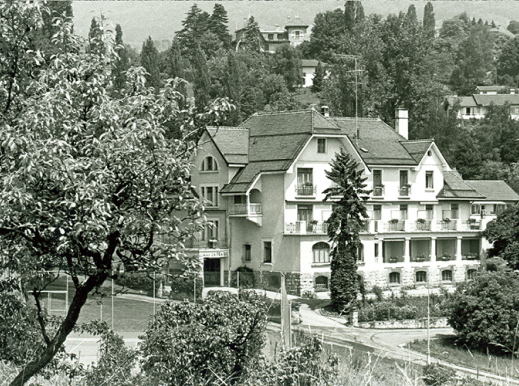
This passion for discovery and dedication to patient care laid the foundation for his life-changing work at Clinique La Prairie in Montreux, Switzerland, in 1931. Here, Dr. Niehans' vision of merging scientific innovation with compassionate care radically altered the course of patients' lives.
Dr. Niehans' groundbreaking work in cellular therapy began almost by accident in 1931. Facing a critical challenge with a dying patient, conventional treatments exhausted, he took a leap of faith. Drawing on his years of research, Dr. Niehans injected the patient with fresh cells from calf parathyroid glands. The outcome exceeded all established medical expectations. Not only did the patient recover, but they exhibited remarkable signs of rejuvenation. Cellular therapy was born.
A Secret Spreads: Growing Reputation and Global Expansion
From that day on, Dr. Niehans replaced transplants or implants with injections for his patients at Clinique La Prairie. These contained fresh cells from organs that were mostly endocrinological, taken initially from young animals, and later from sheep foetuses. He even injected himself. Encouraged by the feelings and observations of his patients, he was convinced that such injections of new tissues stimulated the healing, recovery or rejuvenation of the corresponding human organ.
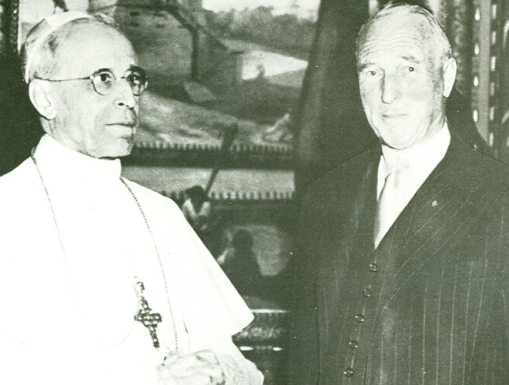
Word spread quietly yet swiftly among the elite. Soon, Montreux became a discreet haven for the powerful. Winston Churchill, Konrad Adenauer, and royalty sought Dr. Niehans' revolutionary "youth cures." In 1953 Dr. Niehans was summoned to the Vatican to treat Pope Pius XII. The successful therapy catapulted Clinique La Prairie into global spotlight. The news immediately spread round the world, carrying with it the name of Clinique La Prairie. A reputation that is still alive today.
Pionneering Longevity Science and Treatments
Dr. Niehans' methods attracted attention from around the world, offering remarkable life-changing results in vitality, health, and overall well-being, solidifying Niehans' reputation as a pioneer in anti-aging medicine.
The clinic quickly gained a reputation as a premier destination for those seeking advanced medical treatments and luxurious care. Under Dr. Niehans' leadership, Clinique La Prairie became a hub for innovation in cellular therapy and longevity. The clinic offered personalized programs that combined cutting-edge medical science with holistic wellness practices, focusing on preventative medicine, detoxification, and rejuvenation.
Scientific Contributions and Legacy
Throughout his career, Dr. Niehans remained committed to advancing the scientific understanding of cellular therapy. He published numerous papers detailing his findings and methodologies, and he presented his research at international medical conferences. Despite facing skepticism and controversy from some quarters of the medical community, Niehans' work laid the groundwork for modern regenerative medicine and cell therapy.